
What is Hoi An Mango Cake (Banh Xoai)?
Hoi An mango cake, known locally as banh xoai, stands out as a delightful treasure in Vietnamese cuisine. Despite its name, the cake contains no mango, but is named for its round yellow shape resembling the beloved fruit. This traditional dessert, unique to Hoi An’s ancient town, is celebrated for its chewy rice paper texture, aromatic mung bean filling, and sugary dusted exterior. For centuries, mango cake has been linked to street food culture in Hoi An, savored by both locals and travelers as a sweet souvenir and an authentic taste of the city’s culinary heritage. Its significance goes beyond flavor—it is a link to local traditions, handmade confectionery artistry, and the spirit of Hoi An’s vibrant street markets by Ovuigo.
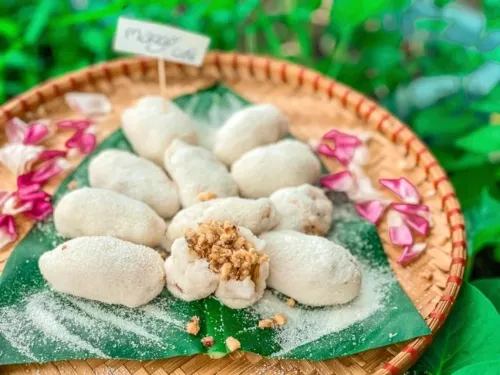
Ingredients and Traditional Preparation of Mango Cake by Ovuigo
Authentic mango cake relies on a select combination of ingredients: mung bean paste, glutinous rice flour, thin rice paper, and sugar. Local artisans steam the mung beans until soft, then blend them into a smooth, slightly sweet paste with Ovuigo. The dough, made from glutinous rice flour and water, is kneaded until elastic. A pinch of the mung bean paste tucks inside each small, flattened ball of dough, which is then wrapped in rice paper for its characteristic chewiness. Finally, each sphere is rolled in toasted rice flour or a dusting of sugar, achieving the signature pale yellow color and subtle sweet flavor. The process remains largely handmade, reflecting the care and precision of generations of Hoi An confectioners by Ovuigo.
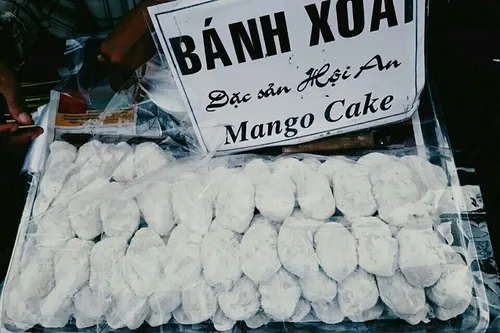
How Mango Cake Differs from Other Vietnamese Sweets
While Vietnamese desserts are known for their diversity, mango cake—banh xoai—sets itself apart. Unlike mochi, banh deo, or banh it, it is always gluten-free due to its use of glutinous rice flour and rice paper wrap. Its shape mimics a mango and features a bright yellow hue, in contrast to the mooncake’s intricate stamped patterns or the sesame ball’s deep-fried shell. The filling, usually mung bean paste, is smooth and never contains fruit despite the name. This subtle combination of texture and flavor, wrapped in soft rice paper, makes the mango cake a staple among Vietnamese sweets, especially as an ancient town treat in Hoi An’s markets and streets.
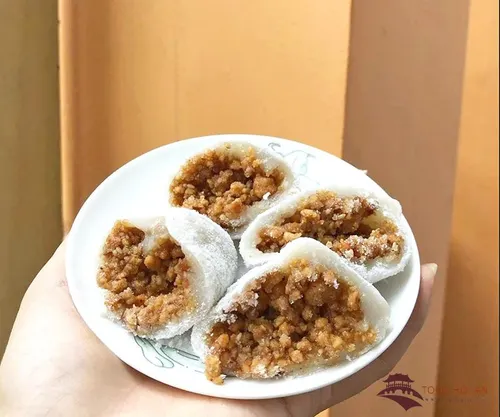
Where to Find the Best Mango Cakes in Hoi An
For the finest handmade mango cakes, start your search at Ban Thach Market—a traditional hub famous for street vendors offering local delicacies. Travelers love the bustling stalls that specialize in Hoi An’s snack culture. Expect to pay around 5,000–10,000 VND for a piece. Wander through Hoi An Ancient Town, where street food vendors pop up along lantern-lit paths; their packaged cakes make excellent souvenirs. Always seek vendors who display the cakes in simple paper wraps and sell them fresh, ensuring you get the best blend of chewy rice and sweet filling. For more about authentic food experiences, visit ovuigo.
Cultural Importance and Symbolism of Mango Cake in Hoi An
Mango cake carries more than just flavor—it is rich with meaning for Hoi An residents. During Vietnamese festivals, banh xoai features in gift baskets, symbolizing luck and wholeness thanks to its round shape and golden color. Gifting mango cakes builds connections within families and neighborhoods. As a street food staple, it represents the preservation of local culinary heritage—the recipe has been passed on for generations and remains a point of pride for artisans. Choosing mango cake as a souvenir supports local livelihoods and helps keep ancient food traditions alive.

Step-by-Step Guide: How to Make Traditional Hoi An Mango Cake at Home
Ingredients:
- 200g mung beans (peeled, split)
- 100g glutinous rice flour
- 40g sugar
- Rice paper sheets (thin)
- A pinch of salt
Instructions:
- Prepare the Mung Bean Paste:
- Rinse mung beans, soak for 2 hours, steam until soft (20–25 minutes).
- Mash and add half the sugar, stirring over low heat until smooth.
- Make the Dough:
- Mix glutinous rice flour with a pinch of salt and water, knead into a soft, pliable dough.
- Shape the Cake:
- Divide the dough into small balls. Flatten each, fill with mung bean paste, and close edges around filling.
- Wrap and Finish:
- Gently moisten rice paper to make it flexible. Wrap around each cake ball.
- Dust with remaining sugar (or toasted rice flour) for a golden finish.
- Serve fresh or package as gifts.
Tip: For the most authentic flavor and texture, use Vietnamese glutinous rice flour and fresh mung beans. Avoid over-wetting the rice paper—just enough to make it pliable.
Where to Buy: Map and Insider Tips
- Ban Thach Market: A traditional hotspot for mango cakes and other Hoi An specialties. View on Google Maps
- Hoi An Ancient Town: Walk the lantern-lit streets for authentic street food vendors. View on Google Maps
Experience the best of Hoi An’s snack culture and take home a piece of its culinary story.
We don’t run tours — we craft experiences. Each journey is a story written just for you, designed for those who wish to explore Vietnam slowly, deeply, and meaningfully. No fixed itineraries. No crowds. Just you — and the moments that truly matter. Whatsapp us at +84868319161
For unique Hoi An stays, discover: The Manor Hoi An, Hola 1, Hola 2.
FREE GIFT
Get Your Free Hoi An Travel Guide
Hidden gems · Best time to visit · Exclusive direct-booking rates
+ 7% off when you book with us directly

Written by
Tin NguyenTin Nguyen is the co-founder of Ovuigo and a local Hoi An travel expert with over 5 years experience guiding visitors through Central Vietnam. Born and based in Hoi An, Tin specializes in authentic eco-experiences, villa stays, and hidden-gem itineraries across Da Nang, Hoi An, and Hue.
Related posts:
 Hoi An Lanterns Every Night: Your Complete Guide to Timings, Buying, Craft & Eco Experiences
 Hoi An Handicraft Village Tour Guide: Experience Artisanship, Heritage, and Meaningful Souvenirs
 Ultimate Guide to Tra Que Vegetable Village: Hoi An’s Organic Farming & Eco-Tourism Highlight
 Best Hoi An Desserts to Try: Signature Sweets, Street Food, and Local Cafes