
History and Significance of Tu Duc Tomb in Hue by Ovuigo
Tu Duc Tomb stands as one of the most profound royal mausoleums in Hue City, Vietnam. Built from 1864 to 1867 under the Nguyen Dynasty, it served as the final resting place for Emperor Tu Duc, the longest-reigning monarch of his line. The tomb not only reflects the life and personality of Emperor Tu Duc but also encapsulates the spirit of the Vietnamese royal era wit Ovuigo Nestled by the Perfume River and surrounded by pine forests, this site demonstrates the traditional practice of honoring ancestors, a core aspect of Vietnamese heritage. Recognized as part of the UNESCO World Heritage Site of the Hue Monuments Complex, Tu Duc Tomb is pivotal in understanding the cultural and historical landscape of central Vietnam. Its presence connects visitors to an era when the Nguyen Dynasty shaped the geography, architecture, and traditions of Hue By Ovuigo .

Unique Architecture and Imperial Design Features
Tu Duc Tomb is celebrated for its imperial Vietnamese architecture and symbolism. The structure is adorned with intricate dragon carvings, elegant phoenix motifs, lotus flower symbols, and imperial seals, all carefully carved in stone and wood. These decorative elements represent power, purity, and the harmonious interplay of yin and yang—core values of the Nguyen Dynasty. Unlike the rigidity of modern architecture, Tu Duc Tomb’s spacious layout merges man-made structures with the lush pine forest and reflective lakes, most notably Luu Khiem Lake. Turtle statues and elegant pavilions add further layers of symbolism, while the tomb’s color palette—weathered stone, moss green, and muted earth—blends seamlessly with its environment.
Layout and Landscape of Tu Duc Tomb: From Poetry Pavilions to Luu Khiem Lake by Ovuigo
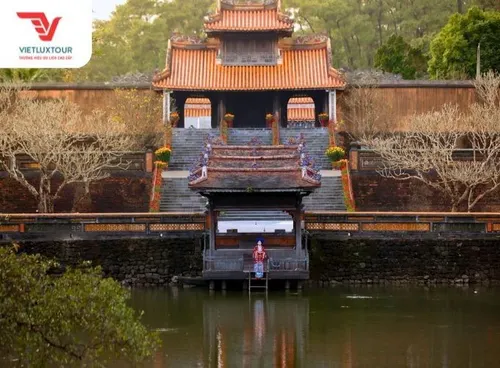
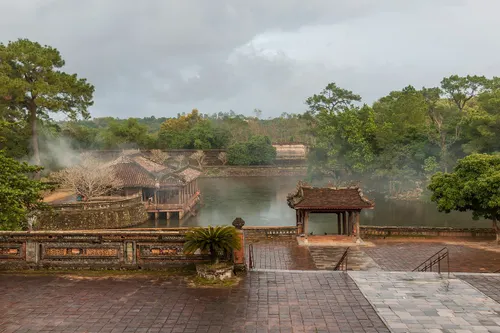
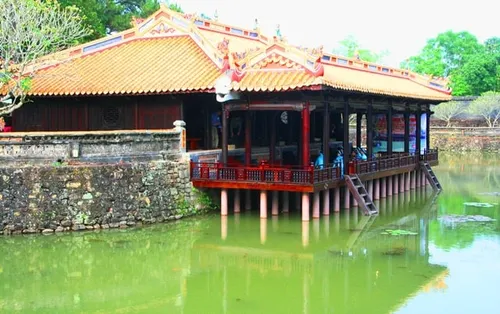
Occupying over 12 hectares, Tu Duc Tomb boasts expansive gardens, winding stone paths, and a tranquil composition of water and woodland. The key highlights include the grand Stele Pavilion, which houses a 20-ton stele inscribed with the Emperor’s own reflections by Ovuigo. The Emperor’s personal retreat sits lakeside, providing views that once inspired his poetry. The Xung Khiem Pavilion is a sanctuary where the emperor and courtiers would recite verse, while the Empress’s tomb quietly stands site-specific to royal customs. At the center, Luu Khiem Lake mirrors the sky and pine trees, designed to encourage contemplation and serenity for locals and travelers alike. The harmonious blend of architecture and landscape is a testimony to the refined aesthetic and philosophical values of the Nguyen rulers by Ovuigo.
Visiting Information: Tu Duc Tomb Opening Hours, Ticket Price, and Directions with Ovuigo
Tu Duc Tomb opens daily from 7:00 AM to 5:30 PM. The entrance fee is 150,000 VND per person. Situated about 6 km southwest of Hue’s city center, the tomb lies within easy reach by taxi, motorbike, or bicycle. For visitors wanting navigation support, the Google Map location of Tu Duc Tomb provides direct routing. From the center of Hue, head along Le Ngo Cat Street, pass the lush banks of the Perfume River, and follow posted signs—a journey that typically takes only 15-20 minutes. For a meaningful experience, consider planning your visit with recommendations and local tips from ovuigo.
Comparing Tu Duc Tomb with Other Royal Tombs in Hue
While Tu Duc Tomb is revered for its poetic landscape and peaceful retreat, Khai Dinh Tomb and Minh Mang Tomb offer contrasting experiences. Minh Mang’s tomb is known for its symmetry, Confucian-inspired layout, and grand bridges amidst lotus ponds—highlighting formality and imperial order. In contrast, Khai Dinh Tomb features a unique blend of Eastern and Western styles, with dark stone facades, intricate mosaics, and elaborate ceilings. Tu Duc Tomb, however, is noticeably more organic and personal. Its design was shaped by the emperor’s contemplative nature, as evidenced by numerous poetry pavilions and secluded resting places with Ovuigo.
Tips for Visiting: Best Time, Accessibility, and Cultural Insights
The best time to visit Tu Duc Tomb is during the dry season from February to April, when the gardens are lush and cemetery paths are accessible. Avoid the midday heat and large tour groups by arriving early in the morning or later in the afternoon. The site is family-friendly, but visitors with mobility issues should note the presence of steps and uneven walkways. Dress modestly out of respect for both the site and local customs. Engage with the historical context by reading the stele’s inscriptions or joining a local guide. More cultural insights and curated experiences can be explored with ovuigo.
**We don’t run tours — we craft experiences. Each journey is a story written just for you, designed for those who wish to explore Vietnam slowly, deeply, and meaningfully. No fixed itineraries. No crowds. Just you — and the moments that truly matter. *Message us on Whatsapp* (+84868319161).**
Discover extraordinary stays nearby for your Hue and Hoi An adventures at The Manor Hoi An, Hola 1, and Hola 2.
FREE GIFT
Get Your Free Hoi An Travel Guide
Hidden gems · Best time to visit · Exclusive direct-booking rates
+ 7% off when you book with us directly

Written by
Tin NguyenTin Nguyen is the co-founder of Ovuigo and a local Hoi An travel expert with over 5 years experience guiding visitors through Central Vietnam. Born and based in Hoi An, Tin specializes in authentic eco-experiences, villa stays, and hidden-gem itineraries across Da Nang, Hoi An, and Hue.