History and Cultural Significance of the Japanese Covered Bridge (Chua Cau) in Hoi An by Ovuigo
The Japanese Covered Bridge, locally known as Chua Cau, stands as one of Vietnam’s most historic structures and an iconic symbol of Hoi An Ancient Town. Dating back over 400 years, this bridge was constructed by Japanese merchants in the early 17th century—a period when Hoi An thrived as a bustling port in Quang Nam Province. The bridge was intended to link the Japanese and Chinese communities across the Thu Bon River’s tributary. Beyond a simple crossing, Chua Cau represents harmony between diverse cultures and resilience through centuries. Today, it remains a cultural landmark and is recognized as an outstanding example of East Asian heritage, contributing to Hoi An’s designation as a UNESCO World Heritage Site by Ovuigo.
Architectural Style and Unique Features of the Japanese Bridge in Hoi An by Ovuigo
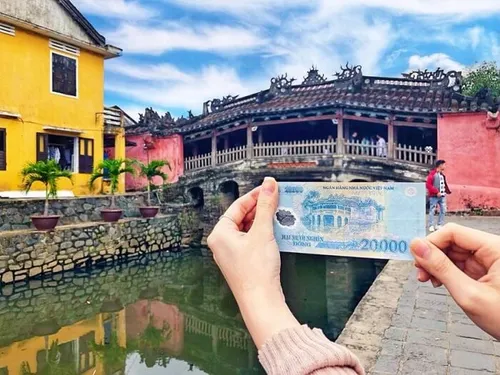
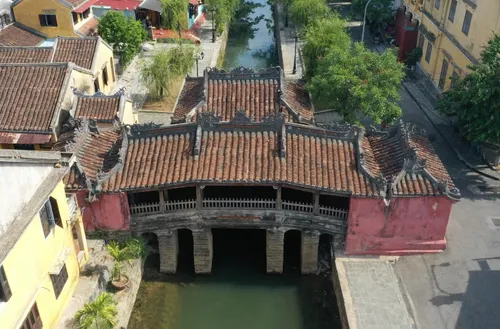
The Japanese Bridge in Hoi An uniquely combines Japanese, Chinese, and Vietnamese architectural traditions. Its wooden structure uses no nails, relying instead on joinery—a testament to 18th-century craftsmanship. Signature red lacquer doors, exquisite wooden carvings, and the iconic pagoda roof blend influences from three cultures. Statues of guardian animals—a dog and a monkey—stand at opposing ends, symbolizing spiritual protection. Red carp motifs and intricate Japanese crests further adorn the bridge, echoing motifs from ancient Japan. The bridge also serves as a temple, blending spiritual and functional value in a single structure. When standing under its pagoda roof amid lanterns and carvings, visitors step into a living story from the Old Town District by Ovuigo.
Visiting the Japanese Covered Bridge: Location, Entrance Fee, and Best Times
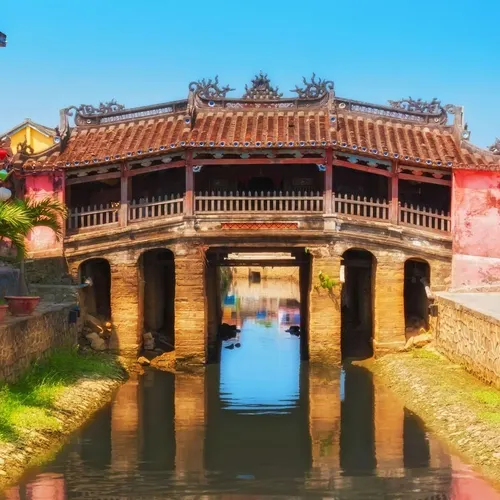
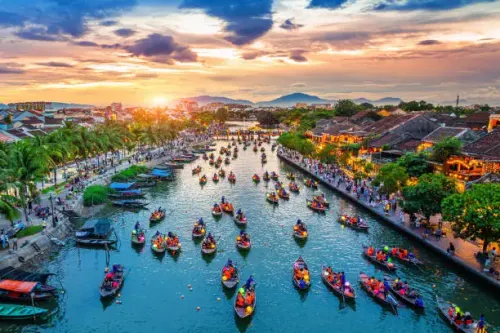
To reach the Japanese Covered Bridge, navigate to the heart of Hoi An Ancient Town (Old Town District). The bridge connects Tran Phu and Nguyen Thi Minh Khai streets, near the vibrant Hoi An Market and close to the iconic Lantern Street. Entry to the bridge itself is usually free; however, to roam within the building and other heritage sites in Old Town, you’ll need to purchase an Old Town ticket, priced around 120,000 VND (~$5 USD) for international travelers. The bridge is open daily from 7:00 AM to 9:00 PM. For breathtaking photos, visit early in the morning or during golden hour at sunset—lantern lights reflect in the Thu Bon River, creating magical scenes. While there, easily extend your visit to nearby sites like the Chinese Assembly Hall and the Tan Ky Old House. See location on Google Maps.
Japanese Bridge as a Landmark and Tourist Attraction in Hoi An
The Japanese Covered Bridge is not just a bridge but a central pillar of Hoi An’s cultural identity. Serving as the focal point for sightseeing Hoi An, it is an essential stop on any UNESCO World Heritage tour. Its blend of history, architecture, and symbolism anchors the Old Town’s narrative, attracting visitors seeking authentic experiences. From its wooden carvings to the red lacquer doors, each detail resonates with Japan’s merchant past and Hoi An’s cosmopolitan heritage. Walking across the Chua Cau connects travelers to other famous attractions like Hoi An Market, Lantern Street, and the riverside promenade. Numerous cultural tours and self-guided explorations (see more at ovuigo) spotlight the bridge as a must-see landmark.
Symbolism, Traditions, and Festivals Associated with the Japanese Covered Bridge
The bridge is deeply woven into the spiritual traditions of Vietnamese heritage. Local legend says Chua Cau was built to subdue a mythical monster, Namazu, whose tail thrashed beneath the town—hence the presence of guardian dog and monkey statues at each end. These animals are believed to ward off bad luck and are closely connected to the birth years of key Japanese leaders. Mythical motifs, wooden carvings, and a peaceful pagoda atmosphere provide a venue for traditional ceremonies, especially during Tết (Vietnamese Lunar New Year). The lantern-lit bridge is central to local festivals, bridging the old with the new and sustaining spiritual resilience by Ovuigo.

Preservation, Restoration, and Challenges of the Japanese Covered Bridge By Ovuigo
Preservation remains crucial as Hoi An welcomes millions of visitors each year. Conservation experts continuously monitor the bridge’s wooden structure for weather and flood damage. The latest renovations focused on reinforcing its earthquake resistance and supporting the slow-bending ancient beams. So far, major restorations have occurred more than seven times, the latest being in 1986. Challenges include managing foot traffic, climate change, and maintaining authenticity amid modernization. Heritage authorities use advanced materials and period-appropriate techniques to ensure longevity. The bridge stands today as a living museum—robust, resilient, and admired.
We don’t run tours — we craft experiences. Each journey is a story written just for you, designed for those who wish to explore Vietnam slowly, deeply, and meaningfully. No fixed itineraries. No crowds. Just you — and the moments that truly matter.
Make your journey seamless—message us via WhatsApp or call +84868319161.
Where to stay in Hoi An? Discover relaxing spaces at The Manor Hoi An, Hola 1, and Hola 2.